
Google Ads vs Meta Ads: Which Is Better for Lead Generation in India?
One captures demand that already exists. The other creates it. Choosing between them is a decision about your customer, not about the platforms.
By Nikhil Khachane · Performance marketer · 15 min read
You have a budget for next month and one decision to make: Google Ads or Meta Ads?
Most advice answers this with a list of pros and cons. That is not the decision you are actually making. The useful question is narrower — where does demand for what you sell already exist, and where does it have to be created?
The honest answer depends on customer intent, existing demand in your category, your business model, how long your sales cycle runs, what you sell, how leads are qualified, and what a customer is worth to you. Get those right and the platform choice mostly makes itself.
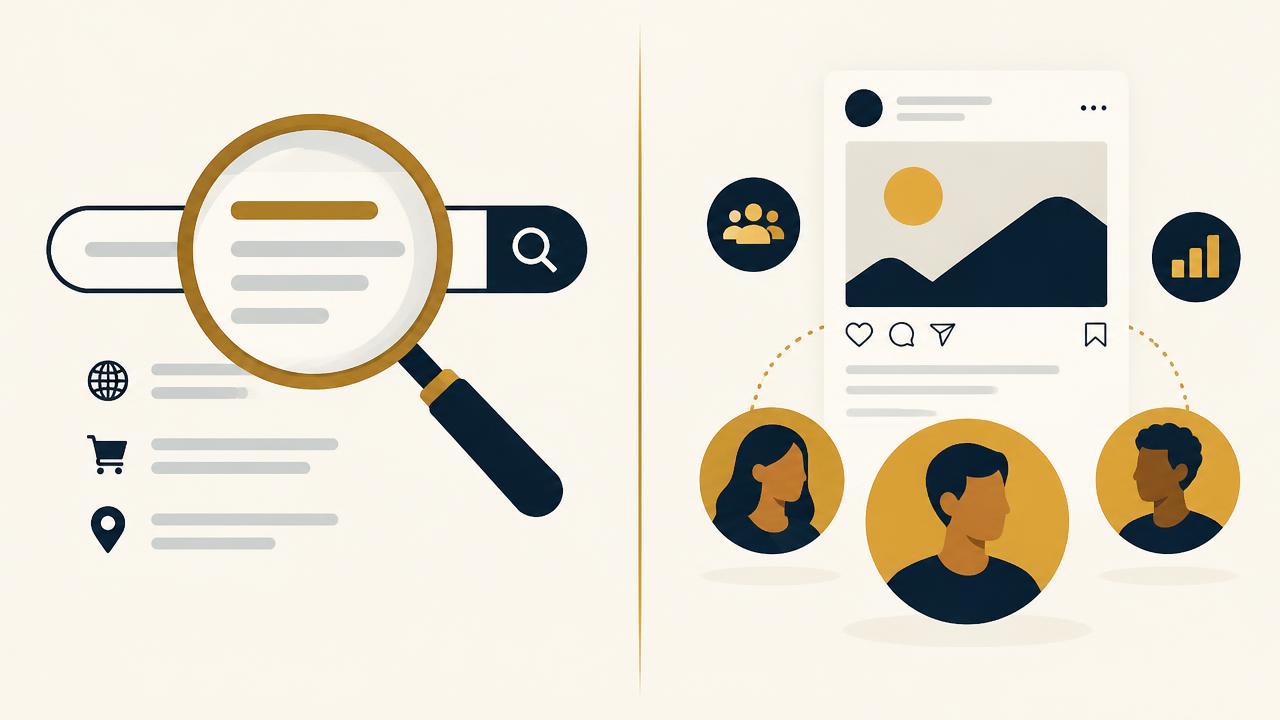
Quick answer: Google Ads is generally stronger when people are actively searching for your product or service, because the intent already exists and you are capturing it. Meta Ads is generally stronger for reaching new audiences, building awareness and creating demand where people are not searching yet. Which performs better depends on your business model, sales cycle and lead qualification process — and for many businesses, using both at different stages of the customer journey produces better results than choosing only one.
Google Ads vs Meta Ads: the biggest difference
Strip away the interface differences and one distinction explains almost everything else: Google Ads mostly captures existing demand, Meta Ads mostly creates and reaches it.
Google Ads captures demand that already exists
Someone types a query. They have already decided they need something:
- “performance marketing consultant in Pune”
- “interior designer near me”
- “AC repair service same day”
You are not persuading them that the need exists — they wrote it down themselves. That is why search leads usually convert faster, and why search clicks usually cost more. You are bidding against everyone else who wants that same moment.
The limit is equally simple: search volume caps your growth. If nobody searches for what you sell, there is nothing to capture.
Meta Ads reaches and influences people before they search
On Facebook and Instagram, nobody arrived looking for you. That is a disadvantage and an opportunity at once. Meta Ads is generally better suited to:
- Introducing a product or service to people who did not know it existed
- Building awareness in a specific city, radius or audience
- Making a visual or emotional case that a text ad cannot
- Creating demand in categories with thin search volume
- Retargeting people who visited your site and left
Do not over-simplify this into “Google for intent, Meta for awareness”. Google runs demand-generation formats on YouTube and Demand Gen; Meta runs high-performing retargeting that captures intent as directly as search does. The distinction is about where each platform is naturally strongest, not about what it is capable of.
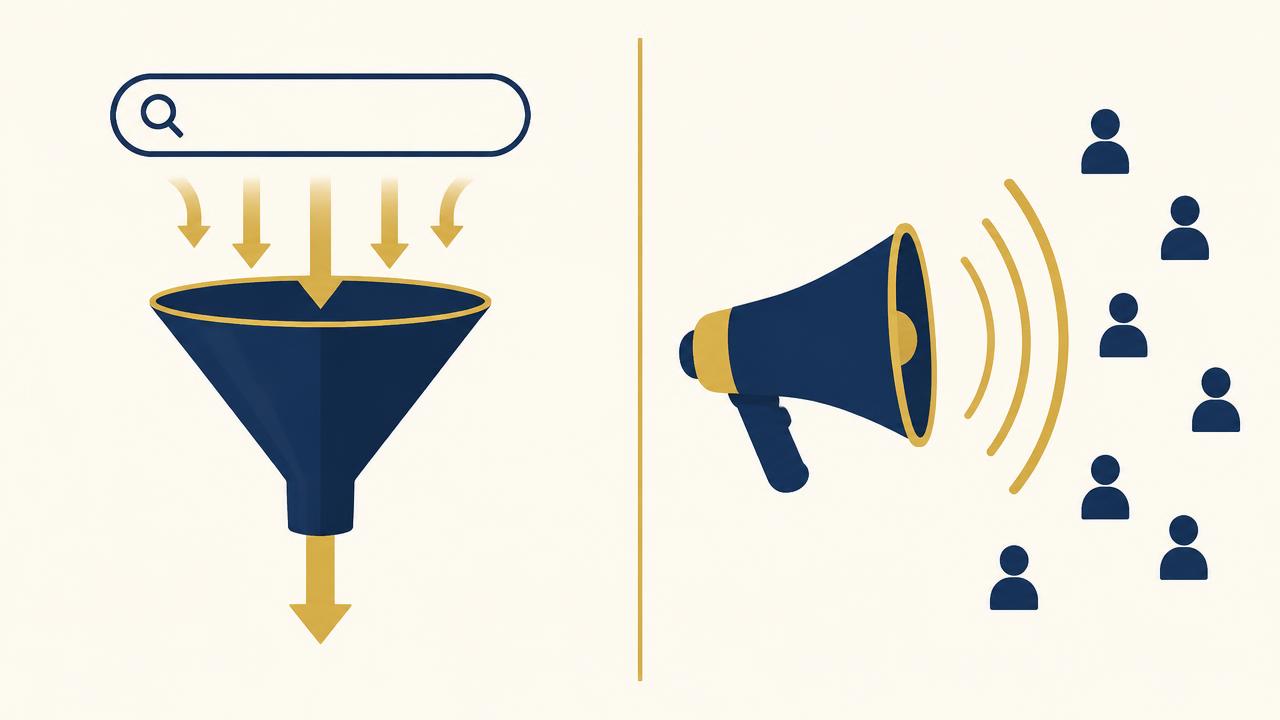
Google Ads vs Meta Ads: quick comparison
Read this as tendencies, not rules. Every row can be reversed by a strong offer, a good landing page or a badly built account.
| Factor | Google Ads | Meta Ads |
|---|---|---|
| Customer intent | Usually high — the person described their need | Usually lower — the person was not looking for you |
| Demand capture | Core strength | Possible, mainly through retargeting |
| Demand creation | Limited on Search; possible via Demand Gen and YouTube | Core strength |
| Targeting approach | Keywords, search terms, location, audience signals | Interests, behaviours, lookalikes, custom audiences |
| Lead quality | Often stronger at the same offer, but keyword-dependent | Depends heavily on audience, creative and qualification |
| Speed to first leads | Fast where search volume exists | Fast, often faster in low-search categories |
| Cost per click | Generally higher in competitive categories | Generally lower |
| Cost per lead | Generally higher | Generally lower |
| Conversion intent | Generally better suited to immediate enquiries | Generally needs more nurturing |
| Awareness building | Limited on Search | Strong |
| Remarketing | Strong across Search, Display and YouTube | Strong and usually cheaper |
| Visual storytelling | Limited on Search; good on YouTube and Demand Gen | Core strength |
| Local business fit | Often stronger for urgent, searchable services | Good for awareness and offers in a defined radius |
| B2B fit | Often stronger for bottom-of-funnel capture | Useful for awareness, content and retargeting |
| E-commerce fit | Strong via Shopping and Search for known categories | Strong for discovery and retargeting |
| Long sales cycles | Captures the moment of active search | Keeps you visible between those moments |
| Measurement | Clear query and keyword-level data | Clearer creative and audience data; noisier attribution |
| Scalability | Capped by search volume | Scales with audience size and creative supply |
Google Ads vs Meta Ads for lead generation
More leads and better leads are not the same objective, and the platform comparison changes completely depending on which one you are measuring.
If the goal is lead volume at a low cost, Meta Ads usually wins. If the goal is enquiries from people ready to buy this week, Google Ads usually wins. If the goal is profitable customers — which it should be — you need the numbers further down the chain: qualified leads, sales conversations, customers, cost per customer and revenue.
A ₹100 lead that never converts is more expensive than a ₹1,000 lead that becomes a profitable customer.
Here is what that looks like across two campaigns on the same budget. Treat the numbers as an illustration of the relationship, not as benchmarks — your category and sales process will produce entirely different figures.
| Metric | Campaign A (cheap leads) | Campaign B (expensive leads) |
|---|---|---|
| Ad spend | ₹50,000 | ₹50,000 |
| Cost per lead | ₹250 | ₹800 |
| Leads | 200 | 62 |
| Qualified leads | 30 | 34 |
| Cost per qualified lead | ₹1,667 | ₹1,470 |
| Customers | 6 | 9 |
| Customer acquisition cost | ₹8,333 | ₹5,556 |
Campaign A produced more than three times the leads and two-thirds of the customers. On the dashboard it looks like the winner. In the bank account it is not. This is the whole argument of why cheap leads can cost more than expensive ones, applied to a platform decision.
Which platform gives better quality leads?
Google Ads typically produces stronger intent, because the person stated their need before your ad appeared. That is a real advantage and it is routinely wasted.
Search intent does not guarantee lead quality. A campaign matching “free”, “cheap”, “jobs” or “how to do it yourself” queries produces high-intent clicks toward an outcome you cannot sell. Lead quality on both platforms comes from the same six controls:
- The keywords or audiences you allow the platform to spend on
- How specific your offer is, and whether it implies a price level
- How well the landing page matches the promise in the ad
- How much friction — and therefore filtering — the form contains
- What conversion event the campaign is optimised toward
- How fast and how persistently leads are followed up
Meta Ads can generate genuinely strong leads, but it demands more of you: a sharper audience strategy, creative that filters as well as attracts, an offer specific enough to discourage the merely curious, qualification questions in the form, and conversion tracking that reports back what actually happened.
Poor Meta Ads lead quality is usually a funnel and qualification problem, not a platform problem.
The twelve specific causes — and the fix for each — are worked through in why Meta Ads leads come in poor quality. If the leads look fine but never buy, the diagnosis is different again: Meta Ads generating leads but no sales covers where that breaks.
Which platform gives cheaper leads?
Meta Ads usually. Reaching a scrolling audience costs less than winning an auction for a commercial search term, so cost per click and cost per lead are typically lower.
That answer is also close to useless on its own, because cost per lead is the second weakest number in your account.
The AdsWithNikhil Lead Quality Framework
Every business measures somewhere on this chain. The further down you can measure, the better your platform decisions get — and the less the CPL debate matters.
Lead
Someone gave you a contact detail. A cost, not yet a result.
Qualified lead
They match your customer, have a real need and can afford the solution.
Sales opportunity
A genuine conversation with a decision in sight.
Customer
The first stage that produces money instead of spending it.
Revenue
The number your ad platform never sees unless you send it back.
Profitability
What survives delivery costs, sales effort and overheads.
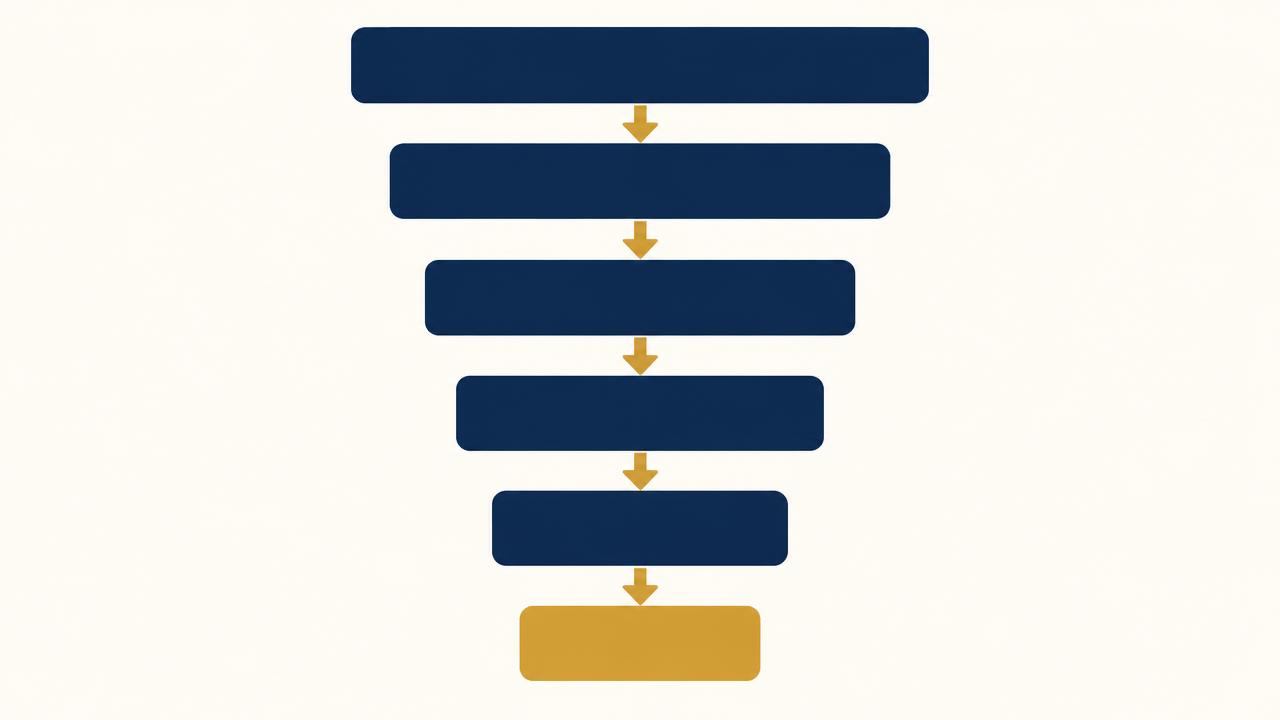
Cost per click tells you what attention costs. Cost per lead tells you what a contact detail costs. Cost per qualified lead is the first number that reflects quality, cost per opportunity is the first that reflects sales reality, and customer acquisition cost against revenue is the only pair that tells you whether to scale. The full measurement build is in how Indian businesses should measure performance marketing.
Not sure which platform is actually producing your customers?
I'll look at where your leads come from, how many are genuinely qualified, and what each platform really costs you per customer — no pitch, no obligation.
Get a Free 10-Minute Paid Ads AuditGoogle Ads vs Meta Ads cost in India
There is no honest national average cost per click or cost per lead, and any article quoting one for your business is guessing. Costs in India vary enormously between categories and cities, and they move constantly.
What actually determines what you pay:
- Industry and competitive intensity in your category
- City and radius — metro competition differs sharply from tier-2 and tier-3
- Keyword commercial intent, or audience size on Meta
- Creative quality and how quickly it fatigues
- Offer strength and how much commitment it asks for
- Landing page conversion rate
- Sales follow-up speed and process
- Seasonality and campaign maturity
Two things are worth holding on to:
A lower cost per click does not mean a lower cost per customer. Cheap traffic that does not convert is the most common way to waste a budget quietly.
A higher cost per lead can still be the better business outcome. If those leads convert at three times the rate, the expensive platform is the cheaper one.
The only reliable way to know your numbers is to run both properly, for long enough, with tracking that follows a lead all the way to revenue.
Google Ads vs Meta Ads for local businesses
Local businesses feel the difference between the platforms most sharply, because urgency varies so much by category.
Dental clinic
Google Ads: Captures people searching for a dentist nearby, root canal cost or emergency treatment. High urgency, immediate enquiry.
Meta Ads: Better for elective, higher-value treatments — aligners, implants, cosmetic work — where people need to see results before they consider it.
Interior designer
Google Ads: Captures searches for interior designers in a city or for a specific project type. Fewer enquiries, more serious ones.
Meta Ads: Strong fit. The work is visual, the decision is emotional, and a portfolio reel does more persuading than a text ad ever will.
Real estate
Google Ads: Captures buyers searching for a locality, project name or budget band — usually further along in their decision.
Meta Ads: Generates volume and awareness for a project, but lead quality varies widely. Qualification questions matter more here than anywhere else.
Coaching institute
Google Ads: Captures course, exam and admission-related searches during enrolment windows.
Meta Ads: Reaches parents and students before they start searching, and works well for seminars, demo classes and batch announcements.
Home services
Google Ads: Usually the priority. AC repair, pest control and plumbing are searched at the moment of need, and speed of response wins the job.
Meta Ads: Useful for annual maintenance contracts, seasonal offers and staying visible to past customers.
Notice that neither platform wins every row. The deciding factor is whether the customer is searching at the moment of need or discovering the option beforehand. The budget-control side of running local search campaigns is covered in Google Ads for local businesses in India, and the Meta equivalent in Meta Ads lead generation in India.
Google Ads vs Meta Ads for small businesses
With a limited budget, running one platform well beats running two badly. Here is how I decide which one.
Start with Google Ads when
- People already search for your service by name or category
- Your business solves an immediate or urgent problem
- Customers compare options on Google before buying
- You can respond to enquiries quickly
Start with Meta Ads when
- Your product needs to be seen to be understood
- Visual storytelling changes how people value what you sell
- Search volume in your category is low or seasonal
- Your offer can create interest in people who were not looking
Run both when
- Your sales cycle runs across weeks or months
- You want awareness and demand capture working together
- Retargeting is a meaningful part of your funnel
- Your budget can support two platforms without starving either
- Your tracking and CRM can tell you which channel contributed
One caveat worth stating plainly: a budget split so thin that neither platform can exit its learning phase will make both look like failures. If you cannot fund two platforms at a level where each generates meaningful weekly conversion data, fund one.
Google Ads vs Meta Ads for B2B
B2B breaks the simple version of this comparison, because the buying journey is long, several people are involved, and the person who fills your form is often not the one who signs.
Search captures the small window when a company is actively evaluating. That window is valuable and narrow, and the keywords around it are usually expensive. Meta reaches the same people during the much longer period before that window opens, when they are reading, comparing and forming opinions.
A realistic B2B sequence looks like this:
Awareness → Education → Trust → Remarketing → High-intent search → Lead → Qualification → Sales
Two consequences follow. First, judging a B2B Meta campaign on week-one CPL will always make it look worse than it is, because its contribution shows up later in a search campaign or a direct enquiry. Second, without CRM-level tracking you will systematically underfund the awareness that made the search conversion possible.
Google Ads vs Meta Ads for e-commerce
E-commerce is the clearest case for running both, for a structural reason: Shopping and Search capture people who already want the category, while Meta reaches people who would want the product if they saw it.
Google Ads works when the product has a name people type — a category, a brand, a specification. Shopping puts price and image directly into the results, which is why it usually outperforms text ads for retail.
Meta Ads works when the product needs to be shown: lifestyle items, fashion, home, anything where the appeal is visual and the purchase is impulsive. Retargeting browsers and abandoned carts is typically the highest-return part of an e-commerce ad account on either platform.
Measure both on blended return — total revenue against total ad spend — alongside contribution margin after shipping, returns and discounting. Platform-reported ROAS from two systems that both claim the same sale will always add up to more than your bank statement.
When should you use Google Ads and Meta Ads together?
The moment your customers take time to decide, the platform comparison stops being a choice and becomes a sequence. This is the framework I use to work out what each platform is responsible for.
The Demand → Intent → Revenue Framework
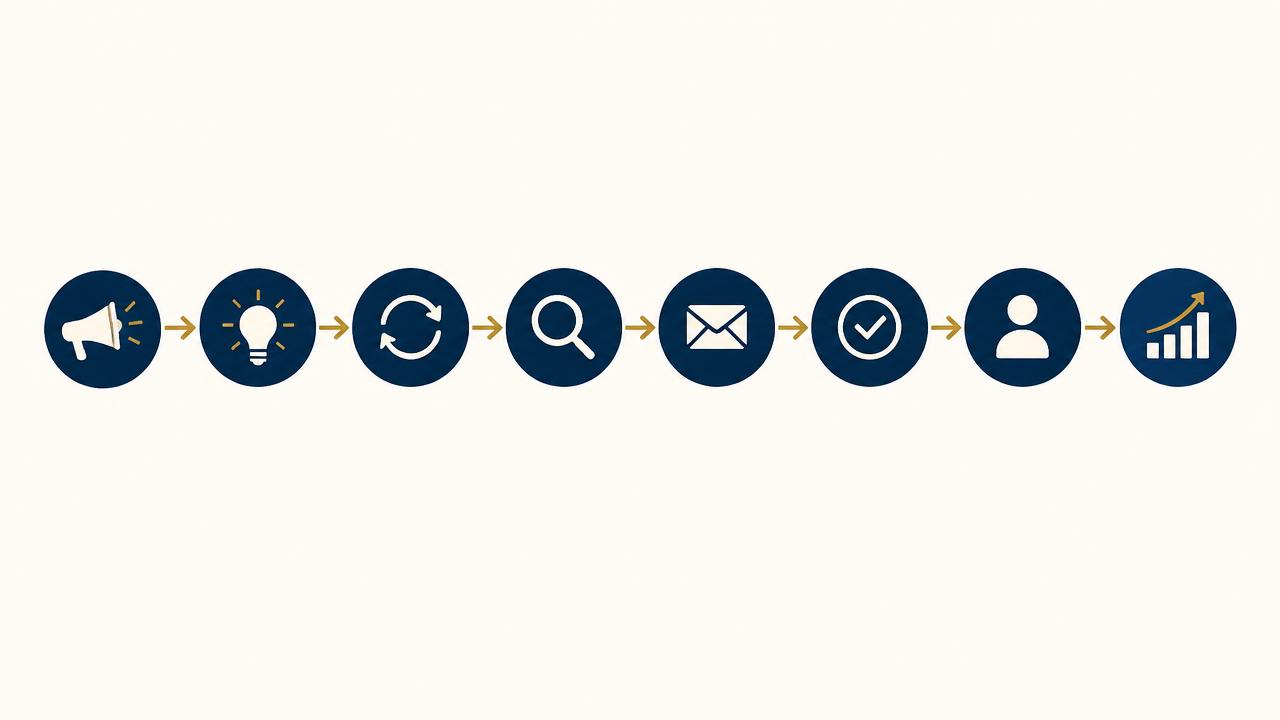
STAGE 1
Awareness
Meta Ads introduces the problem, the category or the brand to people who were not looking for it.
STAGE 2
Interest
Website content, landing pages and articles do the educating. This is where most funnels are thinnest.
STAGE 3
Remarketing
Re-engage the people who read, watched or half-filled a form. Cheapest attention you will ever buy.
STAGE 4
Search intent
Google Ads captures the moment the person actively looks — often for you by name, if stages 1 to 3 worked.
STAGE 5
Lead
The enquiry itself. Useful only if the next three stages are instrumented.
STAGE 6
Qualification
Decide whether the lead is a genuine opportunity, and record the decision somewhere the ad platforms can learn from.
STAGE 7
Customer
Track which platform, campaign and creative the customer originally came from.
STAGE 8
Revenue
Attach a value. Only now can you say which platform performed better.
Read the sequence again and the platform debate looks different. Meta did the work in stages 1 to 3. Google collected the enquiry in stage 4. A last-click report hands the entire result to Google, you cut the Meta budget, and three months later the search volume for your brand quietly declines.
Building this properly — the tracking, the CRM connection, the stage definitions — is a project in itself. The step-by-step version is in how to build a profitable performance marketing funnel from scratch, and the tracking layer under it is conversion tracking and CRM connection.
How to decide between Google Ads and Meta Ads
When a business owner asks me this, I ask three questions back. The answers decide it more reliably than any benchmark.
The 3-Question Platform Selection Framework
1. Are customers already searching for what you sell?
If yes, Google Ads is usually the priority — the demand exists and someone else is currently capturing it.
2. Does your product or service need discovery?
If yes, Meta Ads earns its place — people cannot search for something they have not thought of.
3. Does your customer take time before buying?
If yes, plan for both: awareness, education, remarketing, search capture, and conversion tracking that credits each stage honestly.
Three yeses means you are not choosing a platform — you are building a system. Which is usually the real answer for any business that has outgrown one-off campaigns.
Google Ads vs Meta Ads: which one should you choose?
A starting point by business situation, not a permanent verdict.
| Business situation | Recommended starting point |
|---|---|
| Immediate service demand | Google Ads first |
| Local emergency service | Google Ads first |
| Visual product or design-led service | Meta Ads first |
| New product or unfamiliar category | Meta Ads first |
| B2B service with a long cycle | Both — Meta for awareness, Google for capture |
| E-commerce with known demand | Google Shopping first, Meta for discovery |
| E-commerce with impulse or lifestyle products | Meta Ads first |
| High-ticket service | Both, with strict lead qualification |
| Established local business | Google Ads first, Meta for offers and recall |
| Brand awareness objective | Meta Ads first |
The best choice depends on your business model and customer journey. Treat this table as where to spend the first ninety days, then let your own qualified-lead and customer data decide the next ninety.
Common mistakes businesses make
Most platform disappointments are not platform failures. These nine cause the majority of them.
Mistake 1: Choosing the platform that gives the cheapest leads
Cheap leads are easy to buy on any platform. Broaden the targeting, soften the offer, shorten the form and your CPL falls on both Google and Meta — along with your conversion rate.
Mistake 2: Comparing platforms using CPL alone
CPL compares how efficiently you collected contact details. It cannot tell you which platform produced customers. Cost per qualified lead is the minimum honest comparison.
Mistake 3: Running Meta Ads with no qualification step
Instant forms submitted in two taps need qualification built in — two or three questions in the form, and a clear definition of qualified applied within a day of the lead arriving.
Mistake 4: Running Google Ads without reading search terms
Broad match and automated matching will find queries you never intended to pay for. A weekly search terms review and negative keyword list is the difference between search intent and search waste.
Mistake 5: Sending paid traffic to a weak landing page
Both platforms are judged on a page most businesses never optimise. Homepage traffic from an ad about one specific service is the most common and most expensive version of this.
Mistake 6: Ignoring sales follow-up speed
A lead contacted in five minutes and a lead contacted the next morning are not the same lead. Blaming the platform for a follow-up problem is the most expensive misdiagnosis in lead generation.
Mistake 7: Not tracking qualified leads
If nobody marks which leads were real, every platform comparison is guesswork dressed up as data.
Mistake 8: Not connecting ad spend to revenue
Until campaign data sits next to closed-deal value in a CRM, you are optimising toward form fills forever.
Mistake 9: Expecting one platform to solve everything
Search cannot create demand that does not exist. Social cannot manufacture urgency that is not there. Most growth problems need both, plus a funnel that holds.
If several of these sound familiar and revenue is still flat despite decent campaign numbers, the wider diagnosis is in why your ads can be working while your business is not growing. On the search side specifically, optimising Google Ads for revenue instead of leads covers the bidding change that fixes mistake eight, and Google Ads AI Max in 2026 explains why mistake four matters more now than it used to.
Final verdict: Google Ads vs Meta Ads
Google Ads is often stronger when customers already have search intent. Meta Ads is often stronger when you need to create awareness and reach people who are not looking yet.
Beyond that, the honest answer is that the right strategy depends on customer behaviour, existing demand, your business model, the strength of your offer, the length of your sales cycle, the quality bar for your leads, your budget, and how well you can measure what happens after the click.
For most businesses past the experimentation stage, the strongest strategy is not one platform. It is both, used at different stages of the customer journey, with tracking good enough to see what each contributed.
Stop asking which platform gives cheaper leads. Ask which platform brings the most profitable customers.
The best platform is not the one producing the cheapest lead. It is the one — or the combination — that produces qualified customers and profitable growth. Judge it on intent, lead quality, sales conversion, customer acquisition cost, revenue and profitability, in that order.
Unsure whether Google Ads, Meta Ads or both fit your business?
That answer should come from your customer journey, your sales process and your own data — not from an average CPL. Send me what you're running and I'll tell you what I'd change first.
Get a Free 10-Minute Paid Ads AuditIf you already know which platform you need and want it run properly, I work with businesses as a Google Ads consultant, a Meta Ads consultant and across both as a performance marketing consultant in Pune.
Frequently asked questions
Neither is better in general. Google Ads is usually stronger when people are already searching for what you sell, because the intent exists before your ad appears. Meta Ads is usually stronger when the demand has to be created — new products, visual categories, or audiences who would never type your service into a search bar. The better platform is the one that matches how your customers actually decide.
Related articles
Google Ads AI Max in 2026
AI Max widens how Google matches your Search ads, adapts ad text and picks landing pages. What it changes, where it helps Indian businesses and when to leave it off.
Optimize Google Ads for Revenue, Not Leads
Why lead volume is a vanity metric in India, and the 7-step sequence to move your account from CPL to CRM-connected value-based bidding.
Google Ads for Local Businesses in India
How to advertise on Google in India, location-based targeting strategies, local search intent, negative keywords and conversion tracking — the practical playbook for local Google Ads.
Want this done for your account?
I run these campaigns for startups, e-commerce brands and local businesses from Pune — across India and the GCC.
Google Ads consultant in Pune
Search, Shopping and PMax managed for qualified leads.
Meta Ads consultant in Pune
Facebook and Instagram campaigns built around offer and creative.
Performance marketing consultant in Pune
Strategy, execution and measurement under one owner.
Google Ads lead generation
Lower cost per qualified lead, not just cheaper clicks.
Conversion tracking consultant in Pune
GA4, GTM, Meta CAPI and offline conversion imports.